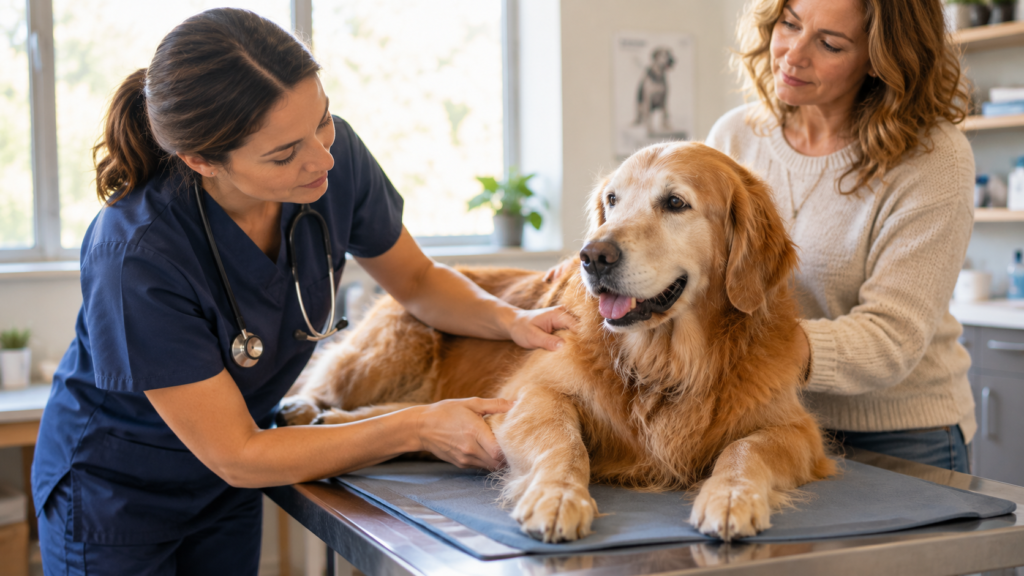
Owning a dog with a job — a service dog, a police K9, a search-and-rescue dog, a working farm dog — raises a question standard pet insurance guides don’t usually address: does regular coverage even apply the same way? The short answer is mostly yes, with a few specific exceptions worth knowing before you assume your policy covers everything a working dog’s role involves.
Three Different Things People Confuse
Pet health insurance reimburses vet bills for accidents and illness, the same as it would for any pet.
Liability insurance covers costs if your dog causes injury to a person or damage to property — typically under a homeowners or renters policy, though higher-risk working roles sometimes need a separate specialty liability policy.
Service dog acquisition and training costs are not covered by health insurance of any kind, human or pet. That’s a distinct financial commitment entirely separate from vet bill coverage.
Job-Specific Risks by Type of Working Dog
- Police and military K9s face elevated risk of traumatic injury during apprehension work, along with the general wear-and-tear risks of an active-duty career.
- Search-and-rescue dogs are exposed to rough terrain, debris, and prolonged physical exertion, raising the odds of orthopedic injury over a working life.
- Herding and ranch dogs cover significant ground daily and face injury risk from livestock, terrain, and extended outdoor exposure.
- Service dogs and emotional support animals generally face lower physical risk than the categories above, but still need the same baseline accident and illness coverage as any pet.
The Exclusion Most People Miss
This is the detail that makes working dog insurance different from a standard policy conversation: a number of mainstream consumer pet insurance providers include language excluding coverage for dogs used primarily for commercial, professional, or working purposes — guard work, racing, breeding for profit, or organized police and military duty are common examples. This doesn’t mean every working dog is automatically excluded, but the exclusion exists in many standard policies and is worth asking about directly before assuming a regular plan covers a dog with a demanding professional role.
For dogs in genuinely high-risk working roles, specialty providers that focus specifically on working and service animals may be a better fit than a standard consumer pet insurance plan, precisely because they’re built around this exclusion rather than around it.
Standard Consumer Plans vs. Specialty Working Dog Coverage
A standard consumer pet insurance plan is built around the assumption of a typical household pet, with routine exposure to everyday risk. A specialty working dog policy, by contrast, is underwritten with the elevated risk of a professional role already priced in, and often explicitly covers the kind of job-related injury a standard plan would exclude.
The trade-off is usually cost: specialty coverage built around a working dog’s actual risk profile tends to run higher than a standard household pet plan, precisely because it isn’t excluding the riskiest part of that dog’s life. For a dog in a genuinely demanding role, that higher premium can still work out to better real-world protection than a cheaper plan with an exclusion that quietly removes coverage for the exact situations most likely to result in a claim.
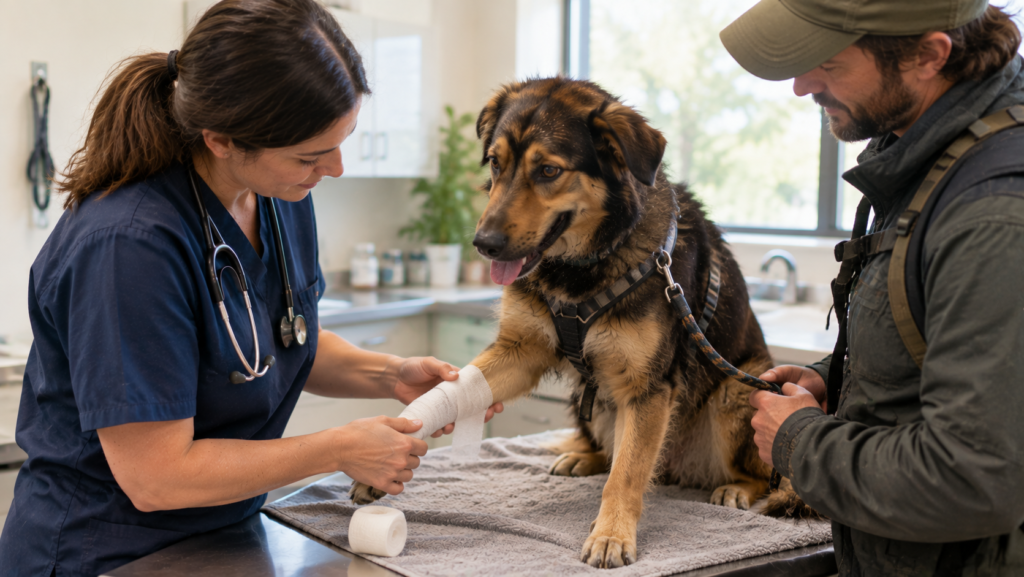
A Real-World Example: A Search-and-Rescue Dog With a Paw Injury
Say a search-and-rescue dog sustains a torn paw pad and soft tissue injury during a training exercise on rough terrain.
| Item | Example cost |
|---|---|
| Emergency vet visit and wound treatment | $400 (example figure) |
| Follow-up bandaging and antibiotics | $150 (example figure) |
| Total cost without insurance | $550 |
| If policy covers work-related injury (80% reimbursement, $250 deductible, example figures) | ~$310 out of pocket |
| If policy excludes work-related injury | $550 — not reimbursed |
This is exactly why confirming the working-dog exclusion language matters more here than for a typical pet — the same accident can have a completely different financial outcome depending on one clause in the policy.
Which Type of Coverage Do You Actually Need?
Select your situation to see which type of coverage is most relevant to check first.
What Documentation Helps When Insuring a Working Dog
Insurers evaluating a working dog’s application generally want clarity on the dog’s actual role, not just its breed. Being upfront about the nature of the work — police duty, search-and-rescue, herding, guard work, or a calmer service role — helps avoid a dispute later if a claim is filed and the provider questions whether the injury falls under an exclusion.
Any formal certification, such as service dog training documentation or K9 unit assignment records, can also support a claim if a dispute arises over whether an incident was work-related. This isn’t always required at enrollment, but it’s worth keeping on hand regardless.
Common Mistakes When Insuring a Working Dog
- Assuming a standard policy automatically covers job-related injuries. Many mainstream providers exclude working, guard, or professional-use dogs specifically — this has to be confirmed directly, not assumed.
- Confusing liability coverage with health coverage. A policy that pays vet bills doesn’t automatically protect you if your dog causes injury to someone else.
- Not disclosing the dog’s working role at enrollment. If a provider later discovers a dog was used professionally without disclosure, it can complicate or void a claim.
- Assuming health insurance covers acquiring a service dog. It doesn’t, regardless of provider — that cost sits entirely outside what pet insurance is designed to do.
Frequently Asked Questions
Does pet insurance cover injuries a police or military K9 sustains on duty?
It depends entirely on the specific policy’s exclusions. Many standard consumer pet insurance plans exclude dogs used for professional, commercial, or working purposes, so this needs to be confirmed directly rather than assumed.
Will my homeowners insurance cover an incident involving my working or guard dog?
Often yes for general liability, but coverage and limits vary by policy and by the specific role the dog performs. Higher-risk working roles sometimes require a dedicated specialty liability policy.
Does health insurance help pay for acquiring a service dog?
No. Neither human health insurance nor pet insurance covers the cost of acquiring, training, or maintaining a service dog. That’s a separate expense entirely.
Is insurance for a service dog more expensive than for a regular pet?
It can be, particularly for dogs in physically demanding working roles, since the elevated injury risk factors into how the policy is priced. A calm service or emotional support dog is typically priced closer to a standard pet.
This article is general information to help you understand how pet insurance applies to working and service dogs. It is not veterinary, legal, or financial advice, and exclusions for working or professional-use dogs vary significantly by provider. Always confirm current policy language directly with the insurer before assuming any specific coverage applies.