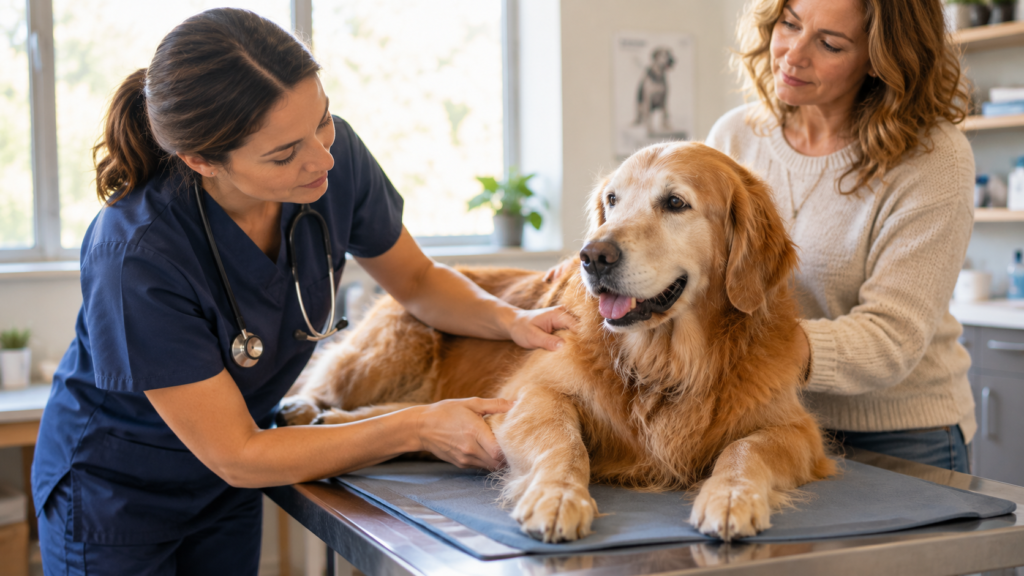
Not knowing your rescue dog’s exact age, breed, or medical history feels like it should complicate getting pet insurance. In practice, it doesn’t affect whether you can get coverage at all — it only affects how a couple of specific rules get applied. This guide covers what actually happens with an unknown history, and the timing decisions that matter most right after adoption.
Rescue Status Doesn’t Affect Eligibility
Insurers underwrite based on whatever information is available at enrollment: species, estimated age, general breed type, sex, and location. A rescue dog with a thin file isn’t rejected for that reason. The insurer simply works with what’s documented, the same way it would for a dog whose full history happens to be missing for any other reason.
What actually changes is how two specific unknowns get handled: an estimated age, and any undocumented health history from before adoption. Neither of these is a barrier to getting a policy — they just shape the details.
How “Pre-Existing” Works When History Is Unknown
This is the part rescue owners worry about most, and the good news is more reassuring than most people expect. An insurer can generally only treat a condition as pre-existing if it’s actually documented, or showing symptoms, at the time you enroll. An issue that surfaces later as a new symptom, with nothing in your dog’s record beforehand, is typically treated as new, not pre-existing — even if it theoretically could have started earlier in a life you don’t have full visibility into.
In practical terms, this means an undocumented history generally works in your favor rather than against you, as long as you enroll promptly and don’t wait until after a vet visit reveals something first. If a shelter or rescue does provide medical records, and a condition is noted in them, that specific condition would still be excluded as pre-existing, the same as it would be for any dog with known history.
What to Do in the First Week After Adoption
- Enroll before the first vet visit, if you can manage the timing. Once a symptom is documented at a vet visit, it becomes part of your dog’s record and could be treated as pre-existing for any policy that starts afterward.
- Ask the rescue organization directly for any records they have, even partial ones. It’s not required to get coverage, but it helps you understand what you’re working with.
- Book a wellness exam with your own vet soon after enrolling. This establishes a clean, current baseline, separate from whatever the rescue may or may not have had.
- Keep a written record of your dog’s estimated age and anything the rescue told you verbally, even if it’s informal. Insurers work with best estimates when exact information isn’t available.
A Real-World Example: A Dog With an Unknown Limp History
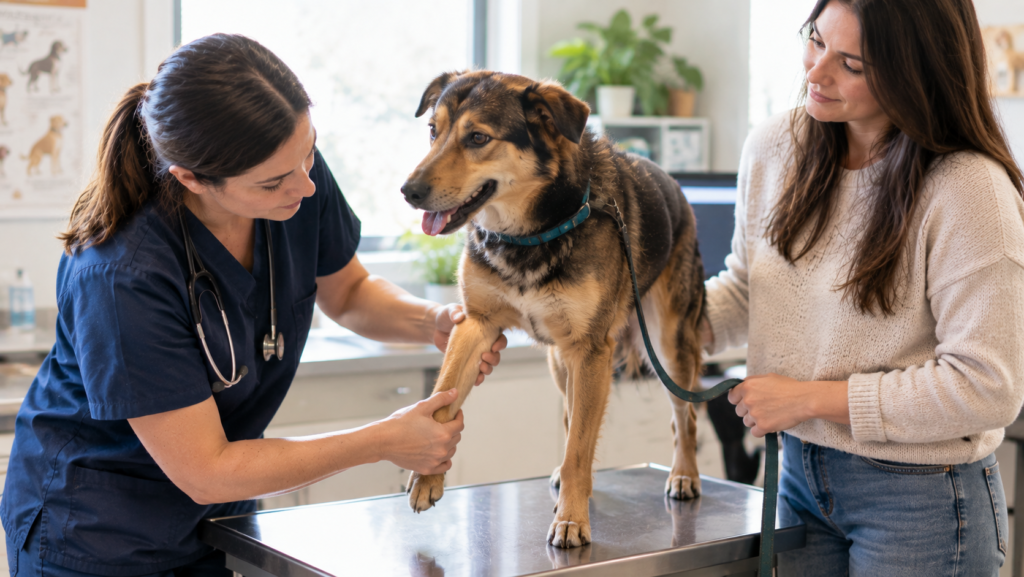
Say you adopt a mixed-breed dog and notice a mild limp a few weeks after enrolling. If nothing about the limp was documented before or at the time you enrolled, this is generally treated as a new issue, not a pre-existing one, even though the dog’s full history before adoption is unknown.
| Item | Example cost |
|---|---|
| Vet visit and X-rays to diagnose the cause | $320 (example figure) |
| Treatment (soft tissue strain) | $180 (example figure) |
| Total cost without insurance | $500 |
| With insurance (80% reimbursement, $250 deductible, example figures) | ~$300 out of pocket |
If that same limp had instead been noted in the rescue’s paperwork or mentioned to your vet before your policy started, it would likely be excluded as pre-existing regardless of how mild it seemed at the time.
Does a Mixed Breed Cost Less to Insure?
Often, yes. Most rescue dogs are mixed breed, and mixed breeds generally carry a lower risk of certain hereditary and breed-specific conditions compared to some purebreds, which can translate into a somewhat lower premium. This isn’t universal, since a mixed-breed dog can still inherit risk factors from either side, but it’s a real factor insurers commonly weigh in pricing.
Conditions Linked to Shelter or Stray Life
Some rescue dogs come from situations that leave specific, predictable marks, and it’s worth knowing what to watch for even though none of this changes your eligibility for coverage.
- Respiratory infections, like kennel cough, are common in dogs that spent time in shelters or group housing, where illness spreads easily between animals.
- Skin conditions, including mange or fungal infections, can result from previous neglect or crowded, unsanitary conditions before rescue.
- Dental issues are frequently more advanced in rescue dogs than in dogs with a full veterinary history, simply because routine dental care may have been missed for a period of time.
- Behavioral concerns, such as anxiety or fearfulness, are common enough in rescues that some providers offer behavioral therapy as an add-on, worth checking if your dog shows early signs of stress-related behavior.
None of these are guaranteed, and plenty of rescue dogs have none of them. But knowing they’re a realistic possibility is useful context when deciding how much coverage, and what kind, actually fits your situation.
Common Mistakes When Insuring a Rescue Dog
- Waiting to see how the dog settles in before enrolling. Every week of delay is a week where an undocumented issue could surface at a vet visit and become documented, changing how it’s treated going forward.
- Assuming an unknown history means automatic exclusions. The opposite is generally true — undocumented history usually works in your favor, since insurers can’t exclude what isn’t on record.
- Not asking the rescue for whatever records exist, even informal ones. It costs nothing to ask, and it gives you a clearer picture even if it doesn’t change your policy.
- Skipping the early wellness exam. A documented clean baseline soon after adoption protects you if a real issue shows up later.
Frequently Asked Questions
Can I get pet insurance if I don’t know my rescue dog’s exact age?
Yes. Insurers work with an estimated age when the exact birthdate isn’t available, which is common enough with rescues that it’s a routine part of the process, not an obstacle.
Will my rescue dog be denied coverage for having an unknown medical history?
No. Eligibility isn’t affected by unknown history. What changes is how pre-existing conditions are determined, generally based only on what’s actually documented at enrollment.
Should I enroll before or after my first vet visit with a new rescue dog?
Before, if you can manage the timing. Anything documented at that first visit becomes part of the record an insurer can reference, so enrolling first generally protects you more.
Do mixed-breed rescue dogs get cheaper insurance than purebreds?
Often, though not always. Mixed breeds tend to carry lower risk of certain hereditary conditions on average, which insurers may reflect in pricing, but individual risk still varies by the specific dog.
This article is general information to help you understand how pet insurance applies to rescue and adopted dogs. It is not veterinary or financial advice, and how pre-existing conditions are determined can vary by provider. Always confirm current policy details directly with the insurer before purchasing.
Sources: Spot — Can Rescue Dogs Get Pet Insurance · Pawlicy — Insuring Rescue Pets