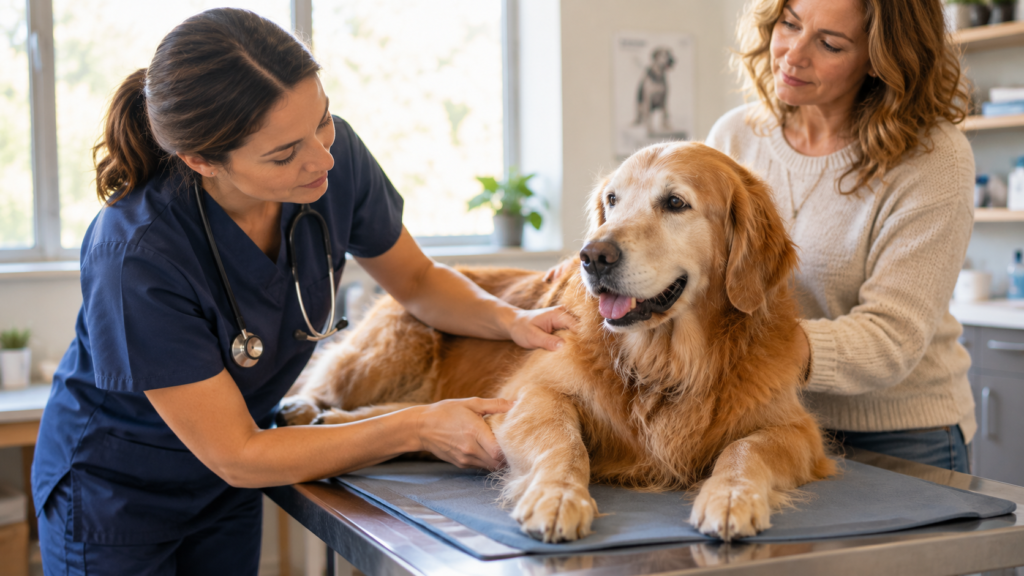
Pet insurance for large breed dogs follows the same basic rules as any other policy, but size changes both the numbers and the risks. This guide explains why bigger dogs can cost more to insure, which health problems shape the cover you need, and the exclusions that matter most before you buy.
How Pet Insurance for Large Breed Dogs Differs
There is no single definition of a large breed. Insurers use their own weight bands or breed lists, and the label usually covers dogs from roughly 50 pounds (about 23 kg) upwards, with giant breeds at the heavier end. Check which category your dog falls into, because it can affect the price you are quoted.
Size matters for two practical reasons. First, vet costs often scale with weight. Medication doses are usually calculated per kilogram, anesthesia takes more drug, and surgery on a large dog can take longer and need heavier-duty equipment. Second, some large breeds are more prone to particular problems, including joint conditions and a digestive emergency called bloat.
Neither point means insurance is a bad idea for a big dog. It means the settings you choose, especially the annual limit and the exclusions, deserve more attention than they might for a small dog.
Health Risks That Shape Cover for Large Breeds
Joint and ligament problems
Hip and elbow dysplasia are conditions in which a joint forms unevenly, which can lead to pain and arthritis over time. Cruciate ligament tears, an injury to a key stabilizing ligament in the knee, are also common in active large dogs. These orthopedic problems tend to come with the longest waiting periods, so read our guide to how pet insurance waiting periods work before you rely on a new policy.
Bloat
Bloat, known medically as gastric dilatation-volvulus, happens when the stomach fills with gas and can twist. It is an emergency that needs immediate treatment, and the bill can be high. Deep-chested breeds are at greater risk. Emergency care is the kind of cost insurance is designed for, provided the policy is already active when it happens.
Life stage
Many large and giant breeds have shorter average lifespans than small dogs, so age-related conditions can show up earlier in life. That makes it more important to start cover while your dog is young and healthy.

The Bilateral Trap and Other Exclusions to Check
Some conditions can affect both sides of the body, such as both knees or both hips. Certain policies include a bilateral exclusion, meaning that if one side is treated as pre-existing, the other side may be excluded too, even if it has never caused a problem. Not every insurer works this way, so it is a detail worth asking about directly.
Here is an illustrative example. The figures are invented to show the logic and are not quotes from any provider. Your dog needs cruciate ligament surgery on the left knee at age 4 and on the right knee at age 6. Each surgery costs $5,000. Both policies have a $500 deductible per claim and an 80% reimbursement rate.
| Policy without a bilateral exclusion | Policy with a bilateral exclusion | |
|---|---|---|
| Left knee, age 4 | Insurer pays $3,600, you pay $1,400 | Insurer pays $3,600, you pay $1,400 |
| Right knee, age 6 | Insurer pays $3,600, you pay $1,400 | Insurer pays $0, you pay $5,000 |
| Total, both surgeries | Insurer pays $7,200, you pay $2,800 | Insurer pays $3,600, you pay $6,400 |
The takeaway: two policies that look identical on price can leave you with very different bills. Ask whether a problem on one side affects cover for the other.
Other exclusions to check include hereditary or breed-related conditions, which some insurers limit, and items such as dental care, weight management and alternative therapies. It also helps to know exactly how a policy defines a pre-existing problem, and our guide to what counts as a pre-existing condition explains the usual rules.
Choosing Limits, Deductibles and Timing
The annual limit is the most an insurer will pay in one policy year. Surgery on a large dog can use up a small limit quickly, so a figure that looks adequate for a small dog may fall short for a big one. The deductible is the amount you pay yourself before the insurer starts paying. A higher deductible usually lowers the monthly premium but raises what you pay on each claim, so pick a level you could comfortably afford at short notice.
Timing matters as much as the settings. Cover that starts while your dog is young, healthy and free of joint symptoms avoids the pre-existing problem later on. Many large-breed owners arrange it during puppyhood, and our guide to pet insurance for puppies covers what to check at that stage.
For typical price patterns, see our guide on how much pet insurance costs by breed and age.
A Practical Checklist for Large Breed Owners
- Confirm your dog’s size category. Ask how the insurer defines a large or giant breed.
- Check the orthopedic waiting period. Joint and ligament cover often starts later than accident cover.
- Ask about bilateral and hereditary exclusions. Get the exact wording in writing.
- Compare the annual limit against realistic surgery costs. A low limit can run out on a single claim.
- Choose a deductible you can afford at short notice. Do not pick the lowest premium without checking what you would pay per claim.
- Start early. Cover that begins while your dog is healthy avoids most pre-existing problems.
Frequently Asked Questions
What counts as a large breed for pet insurance?
There is no universal definition. Insurers use their own weight bands or breed lists, and large usually means roughly 50 pounds (about 23 kg) or more. Ask the provider how it classifies your dog, since the category can change the price.
Does pet insurance cover hip dysplasia?
It can, but only if the condition was not present or showing signs before cover began. Waiting periods and exclusions for hereditary conditions vary by provider, so read the policy wording carefully before you buy.
Is pet insurance more expensive for large breed dogs?
Often, although it depends on the breed, age, location and the settings you choose. Small dogs can also have costly conditions, so compare quotes for your own dog rather than relying on size alone.
Should I insure a large breed puppy now or wait?
Starting cover while your puppy is healthy avoids the risk of problems being treated as pre-existing later. The right timing still depends on your budget, so compare a few policies and read the waiting periods before you decide.
Conclusion
Pet insurance for large breed dogs is mostly about details: the annual limit, the orthopedic waiting period and exclusions such as the bilateral clause. Start while your dog is young and healthy, compare policies on their wording as well as their price, and choose settings you could live with in a bad year.
Sources: American Kennel Club; The Kennel Club.
This is general information, not financial or veterinary advice.